

Who We Support
Primary Partners
We have long-standing relationships with our primary partners, and regularly work with them on capacity-building needs.




Affiliate Partners
We admire the work being done by our affiliate partners, and support them indirectly through robust development of our shared ecosystem.



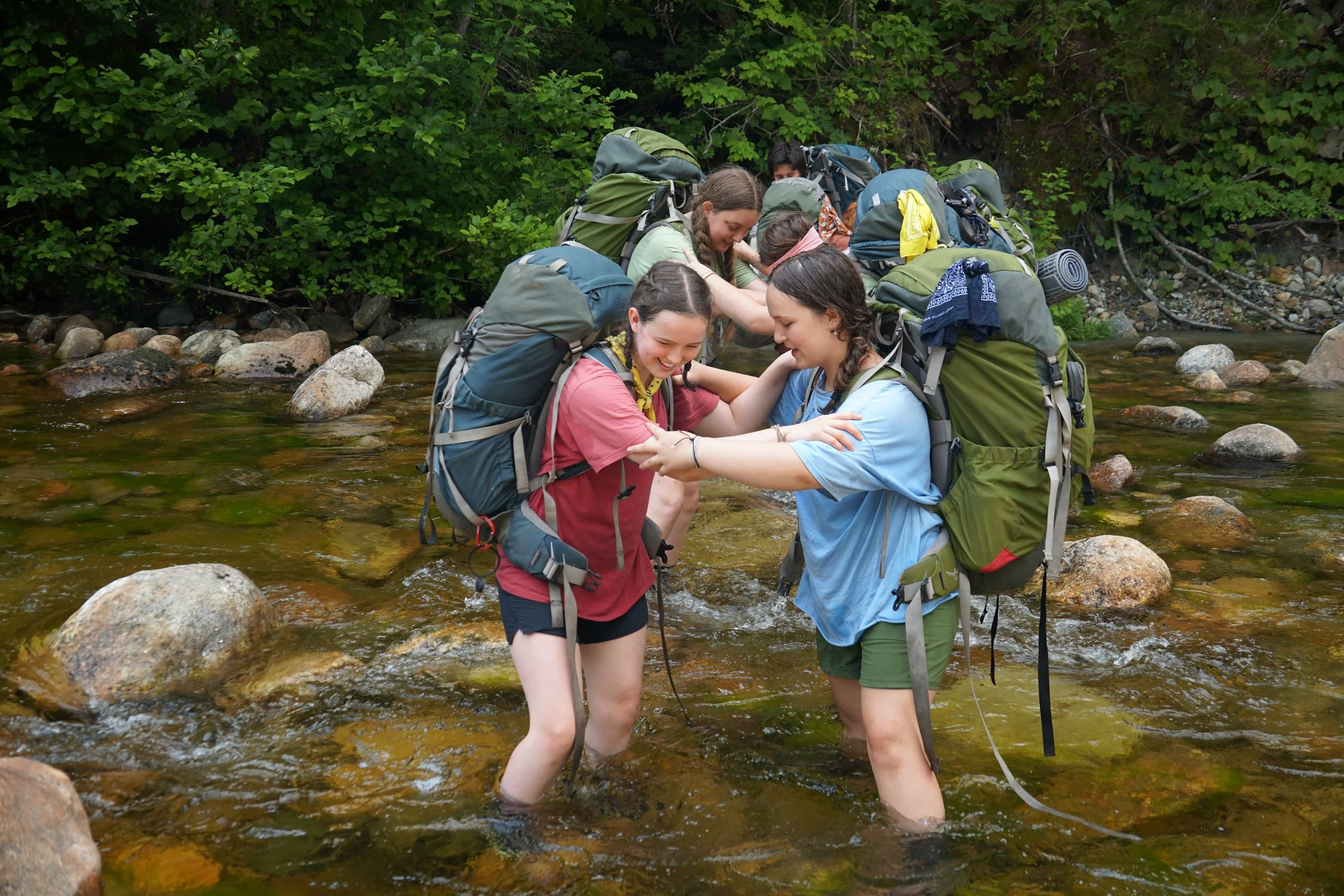


History & Context
The Microcollege Movement
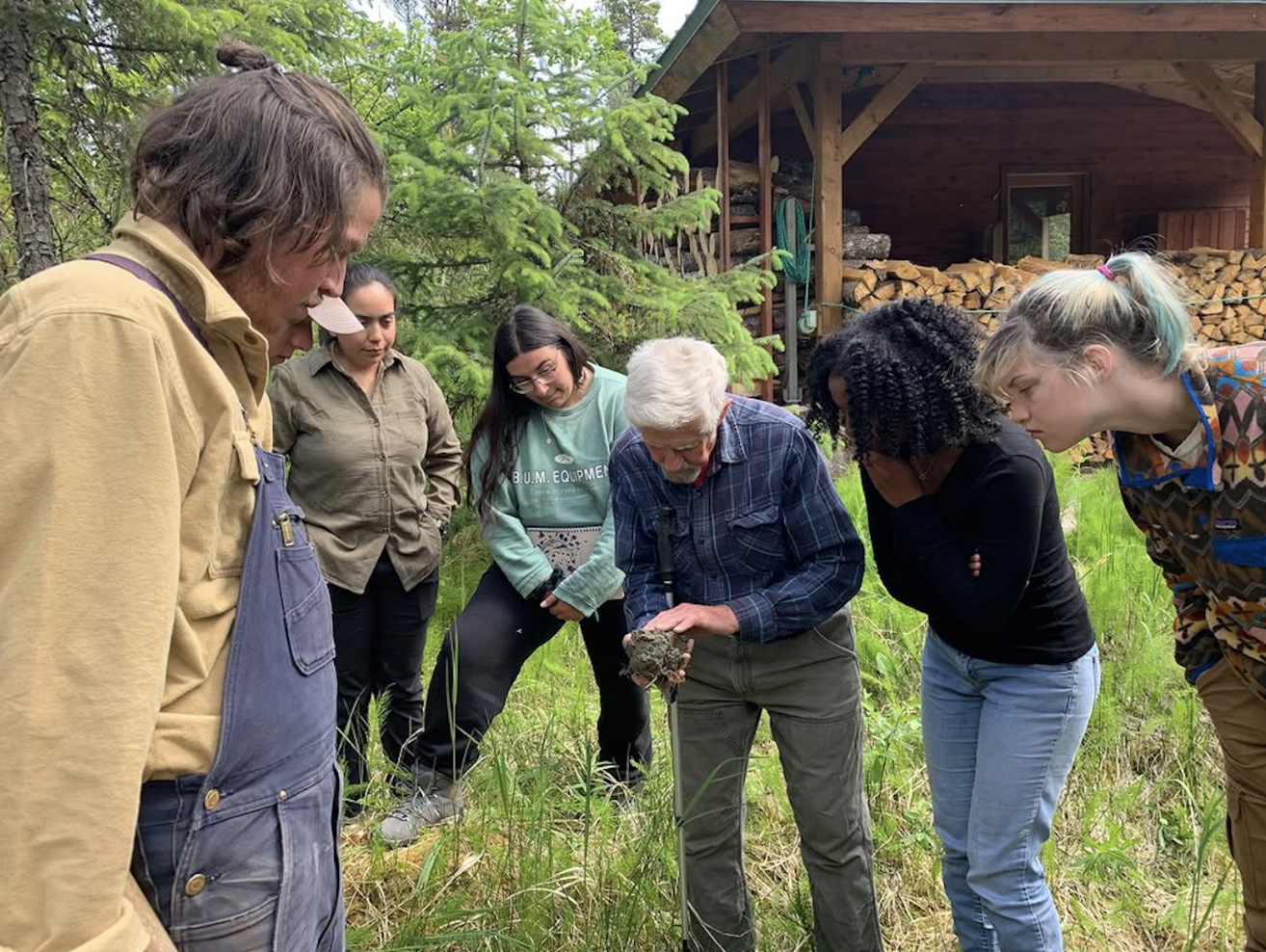
Since 2022, we have focused our support on a cohort of microcolleges that have emerged across rural America.These include Seguinland Institute, Thoreau College, Outer Coast, and Tidelines Institute.
These partners share foundations of being small-scale, communal-living models. Microcolleges also share a bioregional approach, a central academic component, and a complete integration of work and intellectual life.
You can learn more about the microcollege movement in our White Paper.
Historical Influences
The microcollege movement is influenced by a diverse group of historical experiments in higher education — each of which took a unique approach to small-scale models of communal living, and asked big questions about how we should be teaching young people in their most formative years.
Learn more about…
-
Some of our partners – Thoreau College, Outer Coast, and Tidelines Institute – are influenced by the ‘Nunnian’ philosophy of education; named for L.L. Nunn, the founder of Deep Springs College in 1917. Deep Springs is a two-year degree granting liberal arts institution in the high desert of California founded on the three ‘Nunnian’ pillars of academics, labor, and student self-governance.
Academics, labor, and self-governance are the pillars of an education which Nunn thought most effective to prepare young people “for a life of service to humanity.” (10) Nunn’s years in rural western america specifically influenced him to anchor the program on student autonomy and ownership; he saw small communities of people operating as independent collectives, and determined that “self-governance could foster [the] individual virtues” that he saw in those communities.
Deep Springs now has a 100 year legacy as one of the most transformative experiences that college can offer, and is one of the most selective institutions in the country. CBS’s “60 Minutes” featured DS as a college that “works” in an era of college calamities (Wertheim, 2022). [link 60 minutes]
Deep Springs offers direct evidence of the long-term sustainability and success for micro-models. And, has gone on to inspire a cascade of new projects. Thoreau, Outer Coast, and Tidelines are each founded and/or directed by a former student or employee of Deep Springs College.
Nunnian institutes have formed a community of practice and meet yearly for a conference. You can learn more about them here.
-
The famous Black Mountain College was a small school in Black Mountain, North Carolina that employed shared community governance, a hallmark design-and-build labor program, and radical ideas about mastery and expertise.
For example, in academics, students’ course of study was devised by their own accord. There were no regular exams, requirements, or gradings. Students decided when they were ready to advance from ‘junior’ standing to ‘senior,’upon which they presented a demonstration of knowledge to a committee. The construction program filled everyone with a sense of “exuberance and vitality” that came with “getting something done.” (Duberman, 1972)
The goal was a “simultaneous training of the mind and hand” by engaging in intellectual and physical work side by side. It would last 24 years and serve 1,200 students across its lifetime. In an extensive history about its legacy, it was named one of the most important artistic and intellectual communities of the 20th century, and continues to capture the imagination of the American public.
The culture has been characterized by “vigor, spirit, and intellect”, and a lack of formality in the structures of the school, and in “dispensing with the insulation that comes from the usual separation of living and learning.” BMC was a project of “artistic placemaking, democratic governance, and a student-centered environment.” (Duberman, 1972)
-
The Scandinavian Folk Schools of the 1840s are known to be one of the most influential education experiments of this kind. They sought to equip young leaders with the agency, belonging, and a sense of responsibility to meet a time of unprecedented political change and social modernization in Denmark at the time.
These institutes were small living-learning communities in rural areas that integrated intellectual and agricultural work through embodied labor and a highly place-specific humanities curriculum. Through self-sufficient communal living they both achieved individually by “building a sense of accomplishment and an ‘I can do stuff’ mentality”, and saw themselves as a “node in a network of selves, and thus learning mutuality and holistic thinking.” (Andersen, 2017)
As Lene Rachel Andersen describes in her book, The Nordic Secret, Folk Schools worked. They are largely credited with catalyzing profound civic and cultural transformation (including by federal reports) for Denmark’s successful transition to democracy. (citation) In less than a generation, Folk Schools grew to serve between 10% and 20% of rural youth in Denmark. And the word spread, recognizing the Folk School model as a success.The success of the Folk Schools was not about the curriculum, but of the form or model itself. American civic leaders and intellectuals made several trips to Denmark in the 1930s and returned with plans to start folk schools of their own – resulting in, for example, Highlander Folk School in rural west Tennessee.

Student at Deep Springs on a labor shift.
[Photo by John Locher / AP]
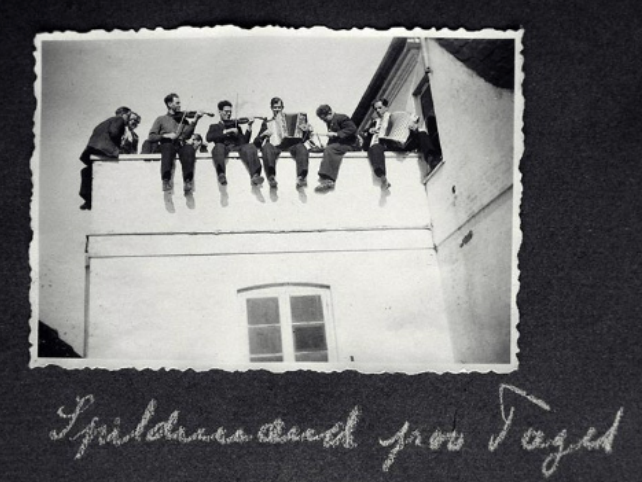
Students at Rødding Højskole, one of the first Folk Schools in Denmark.
[Photo by Nikolaj Hygebjerg]
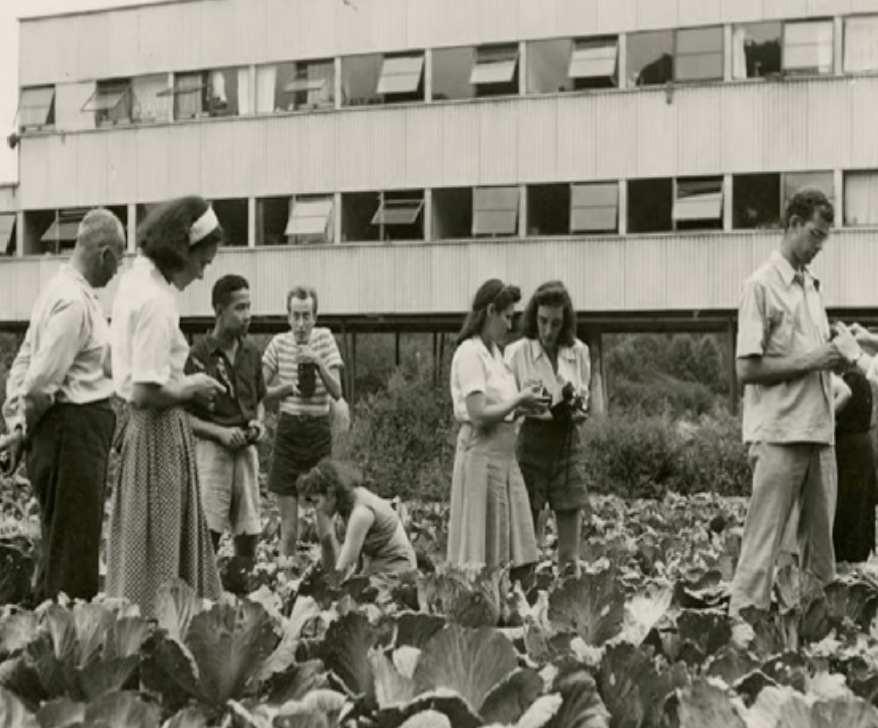
Class in the cabbage patch at Black Mountain College.
[Photo from the Western Regional Archives]
It is hard to imagine a more ideal partner in Seguinland's work to cultivate hope, joy and resilience in the next generation. Springboard has helped us to believe more deeply in our mission, to expand our capacity to serve, to solidify our institution and to expand our vision beyond the next horizon.
— Philip Francis, Founder & Executive Director, Seguinland Institute